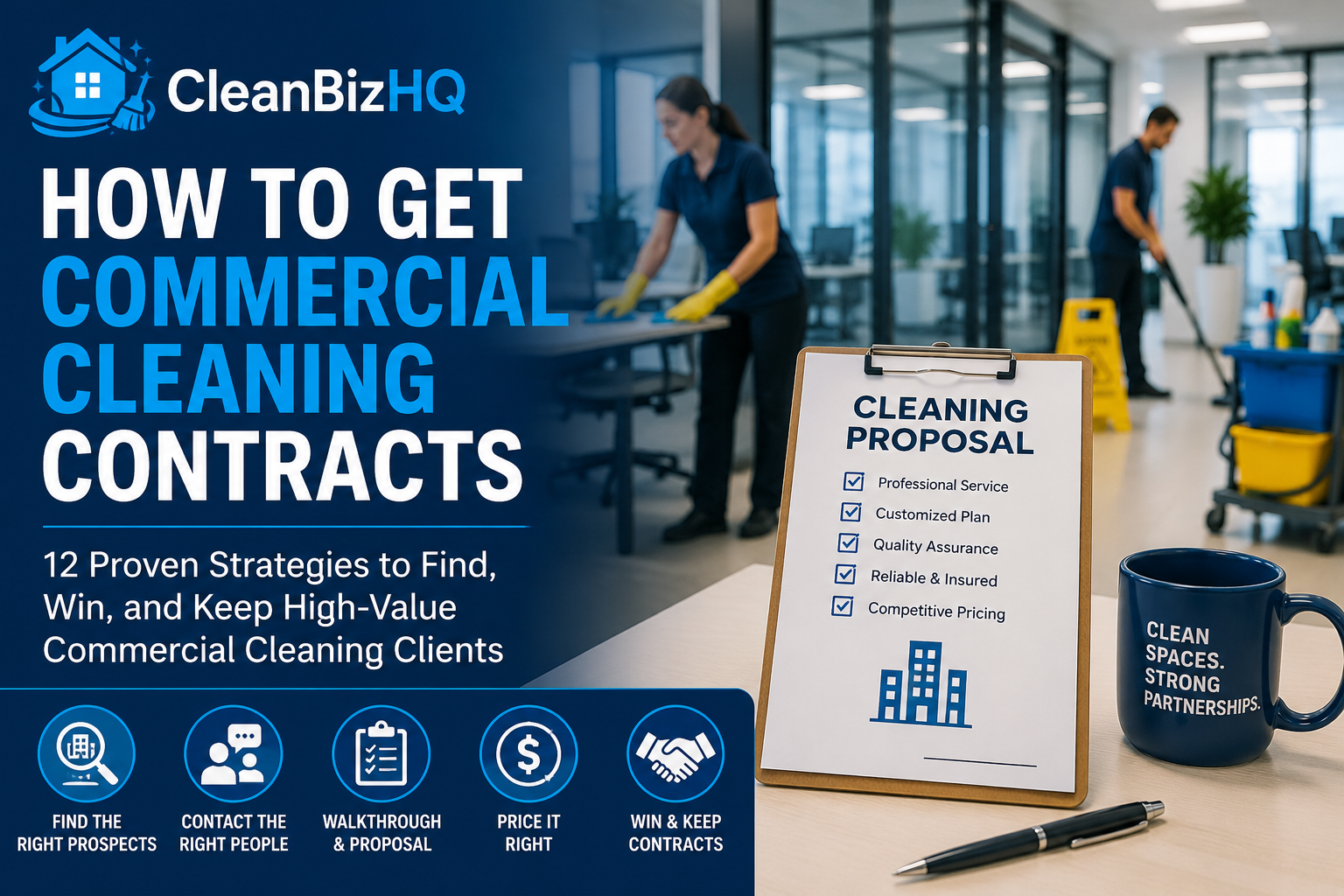
How to Get Commercial Cleaning Contracts: 12 Proven Strategies
Commercial cleaning contracts can provide steady recurring revenue, larger accounts, and a more predictable schedule than one-time residential jobs. The challenge is getting in front of the right decision-makers and proving your company is reliable enough to handle their facility.
The strongest approach combines targeted prospecting, professional walkthroughs, accurate pricing, clear proposals, and consistent follow-up.
This guide explains how to find commercial cleaning opportunities, approach prospects, submit stronger bids, and improve your chances of winning recurring contracts.
Quick Answer: How Do You Get Commercial Cleaning Contracts?
Choose a specific type of facility, build a local prospect list, contact the person responsible for janitorial services, and offer a professional walkthrough. Then submit a clear proposal, follow up more than once, and keep the prospect in your pipeline until they are ready to change vendors.
1. Choose the Commercial Accounts You Want
Do not try to target every type of facility at once. A focused offer is easier to explain and easier for prospects to trust.
- Small offices
- Medical and dental offices
- Daycare centers
- Churches
- Retail stores
- Fitness centers
- Apartment common areas
- Property-management offices
- Schools and private academies
- Warehouses and light-industrial spaces
Choose two or three facility types that fit your equipment, staffing, experience, and preferred schedule. You can expand later.
2. Build a Local Prospect List
Create a spreadsheet or CRM list of businesses you can serve profitably. Include the business name, address, phone number, website, contact person, email address, facility type, and notes.
Good places to find prospects include Google Maps, chamber-of-commerce directories, business parks, commercial real-estate listings, LinkedIn, property-management websites, and local networking groups.
A smaller list of qualified prospects is usually better than a large list of businesses outside your ideal service area.
3. Find the Right Decision-Maker
Commercial cleaning decisions are often handled by an office manager, facility manager, property manager, operations manager, practice manager, administrator, or business owner.
Ask who is responsible for janitorial or facility vendors instead of sending a generic message to a front-desk inbox.
Simple Phone Script
“Hi, my name is [Name] with [Company]. We provide commercial cleaning in the area. Who handles janitorial or facility-service decisions for your location?”
4. Use Direct Outreach
Commercial cleaning companies often grow faster when they actively contact businesses instead of waiting for website leads.
- Short introductory emails
- Phone calls
- LinkedIn messages
- In-person drop-offs
- Direct mail
- Networking events
- Referral introductions
Sample Outreach Message
“Hi [Name], I own [Company], a local commercial cleaning business serving [Area]. We help offices and professional facilities maintain reliable, consistent cleaning. I would be glad to provide a walkthrough and quote whenever you review your current service.”
5. Offer a Professional Walkthrough
The walkthrough helps you price the account correctly and shows the prospect that you understand commercial cleaning.
Document:
- Square footage
- Number of offices, restrooms, break rooms, and common areas
- Flooring types
- Trash volume
- Cleaning frequency
- Security and access requirements
- Special surfaces or equipment
- Supply responsibilities
- Preferred schedule
- Current service complaints
Ask what they dislike about the current service. Their answer often tells you exactly what to emphasize in your proposal.
6. Price the Contract Carefully
Commercial cleaning should be priced from the actual scope of work, labor time, frequency, supplies, travel, overhead, and desired profit—not from a random square-foot rate alone.
- Labor hours per visit
- Hourly labor cost
- Payroll burden
- Supplies and consumables
- Equipment costs
- Travel time
- Supervision and inspections
- Administrative overhead
- Profit margin
- Periodic or add-on work
Review our cleaning service pricing guide → before finalizing your bid.
7. Submit a Clear Proposal
A strong proposal should make it easy for the prospect to understand exactly what is included.
- Business name and contact information
- Facility name and address
- Detailed scope of work
- Cleaning frequency
- Service schedule
- Monthly or per-visit price
- Optional add-on services
- Supply responsibilities
- Insurance details when applicable
- Quality-control process
- Communication process
- Terms and proposal expiration date
Avoid sending only a price in an email. A professional proposal makes your company look more established and helps prevent scope disputes.
8. Follow Up More Than Once
Many commercial contracts are not won on the first contact. Existing agreements may not expire for months, and vendor changes are often delayed.
- Follow up two or three business days after sending the proposal.
- Follow up again about one week later.
- Ask when the current contract expires.
- Request permission to check back before the next review period.
- Add the prospect to a long-term follow-up list.
Professional persistence helps. Repeated pressure does not.
9. Ask Existing Customers for Referrals
Current customers may know office managers, business owners, property managers, or local organizations that need dependable cleaning.
Referral Request
“We are currently accepting a few additional commercial accounts in the area. Do you know any office managers, property managers, or business owners who may need reliable cleaning service?”
Residential customers may also know of opportunities through their workplace, church, daycare, medical office, or business.
10. Build Relationships With Property Managers
Property managers can be valuable referral sources because they oversee multiple buildings, tenants, apartment communities, and common areas.
Offer quotes for vacant units, move-outs, office spaces, common areas, and recurring janitorial work. Respond quickly when they request pricing.
11. Register as a Vendor
Schools, municipalities, healthcare organizations, and larger companies may require vendor registration before bidding.
- Business registration information
- EIN
- W-9
- Certificate of insurance
- Workers’ compensation information when required
- References
- Background-check information
- Safety documentation
- Banking or payment details
Vendor registration does not guarantee work, but it can place your company in the approved provider pool.
12. Make Your Company Easy to Trust
Commercial buyers are not only comparing price. They are also deciding whether your company will show up, communicate, protect the facility, and handle problems professionally.
- Professional website
- Business email address
- Insurance
- Written proposals
- Branded uniforms or apparel
- Cleaning checklists
- Quality inspections
- Reliable communication
- Customer references
- Prompt responses
Strengthen these areas with our cleaning business systems guide →.
Common Mistakes That Cost Cleaning Contracts
- Bidding too low just to win the account
- Failing to define the scope
- Skipping the walkthrough
- Sending a price without a proposal
- Not asking who makes the decision
- Failing to follow up
- Promising service levels you cannot staff
- Ignoring travel time and supply costs
- Not carrying appropriate insurance
- Waiting until you are desperate for work before prospecting
An underpriced or poorly scoped contract can hurt the business more than losing the bid.
A Simple Weekly Prospecting Plan
- Add 10 qualified businesses to your prospect list.
- Contact five decision-makers.
- Visit two nearby businesses or business parks.
- Follow up on every open proposal.
- Ask one customer for a referral.
- Connect with one property manager or business group.
- Review the results and repeat next week.
Consistency matters more than making one large burst of calls and then stopping.
Final Verdict
The best way to get commercial cleaning contracts is to combine targeted prospecting, professional walkthroughs, accurate pricing, strong proposals, and consistent follow-up.
Do not rely on one marketing channel. Build relationships with local businesses, property managers, current customers, networking groups, and vendor programs.
Commercial sales can take longer than residential sales, but one well-priced recurring account can be worth the effort.
Frequently Asked Questions
How do I find commercial cleaning contracts?
Build a local prospect list using business directories, Google Maps, property-management companies, networking groups, referrals, and vendor-registration opportunities. Then contact the person responsible for janitorial or facility services.
Who should I contact about commercial cleaning services?
The decision-maker may be the office manager, facility manager, property manager, operations manager, practice manager, administrator, or business owner.
How do I bid a commercial cleaning job?
Complete a walkthrough, document the scope, estimate labor time and costs, add overhead and profit, and submit a clear written proposal.
Should I charge by the hour or by the month?
Many commercial contracts are presented as a monthly price based on labor, frequency, supplies, overhead, and profit. The internal calculation can still begin with estimated labor hours.
How long does it take to win a commercial cleaning contract?
Some prospects may decide quickly, while others wait until an existing agreement expires. Consistent follow-up and long-term relationship building are important.