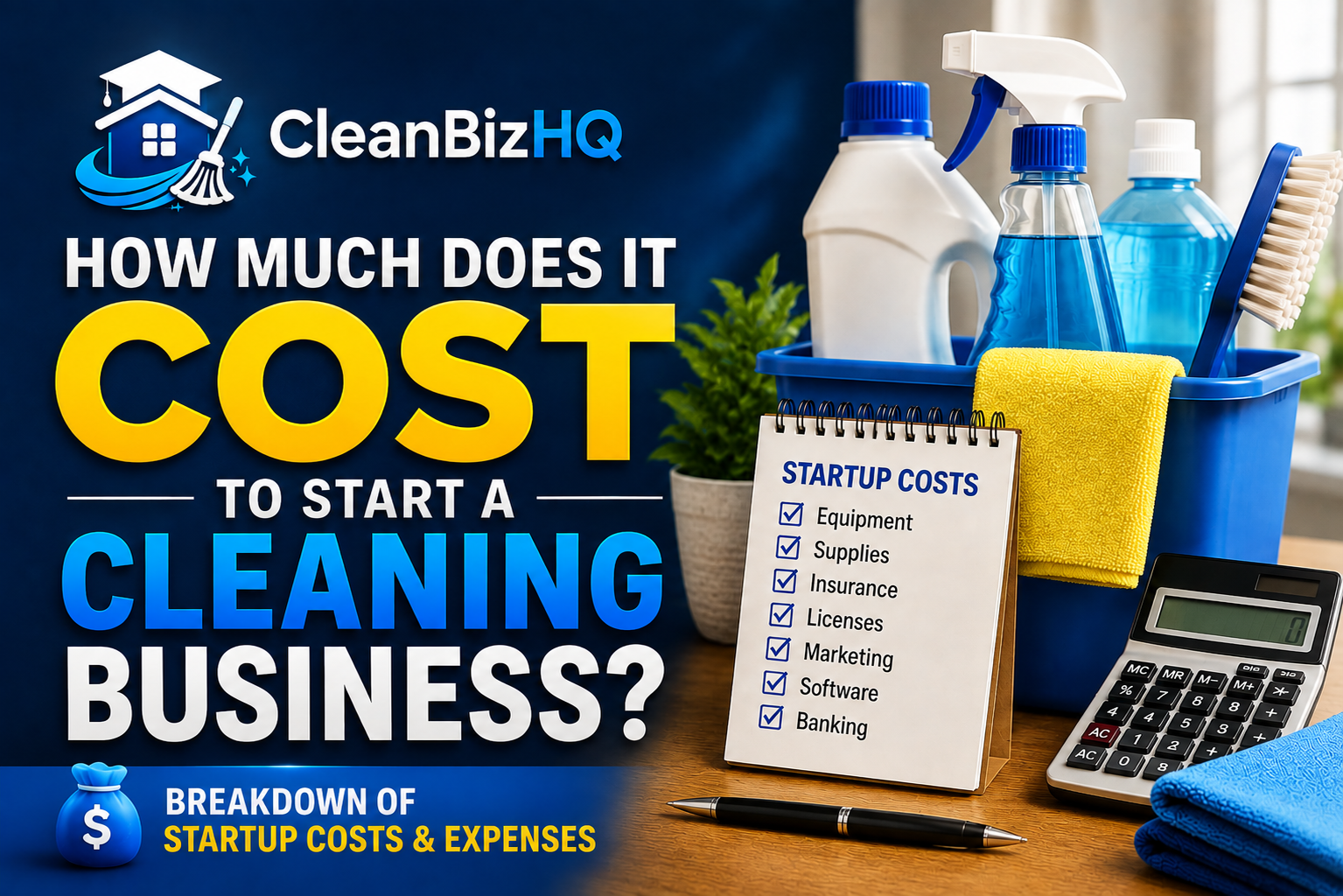
How Much Does It Cost to Start a Cleaning Business?
Starting a cleaning business is one of the most affordable ways to become your own boss. Unlike many other industries, you don’t need a storefront, expensive equipment, or a large staff to get started.
The exact startup cost depends on the type of cleaning services you offer, your location, and how quickly you want to grow. However, most residential cleaning businesses can launch for less than $2,000.
In this guide, we’ll break down the common startup expenses and show you how to start a cleaning business on a realistic budget.
Average Cost to Start a Cleaning Business
Most new cleaning business owners spend between $500 and $5,000 to get started.
Here’s a general breakdown:
- Basic startup: $500–$1,500
- Professional startup: $1,500–$3,000
- Growth-focused startup: $3,000–$5,000+
Many successful cleaning companies begin with basic supplies, a vehicle, and a few clients before gradually investing in additional equipment and software.
1. Business Registration Costs
Before serving customers, you’ll need to legally establish your business.
Common expenses include:
- LLC filing fees
- Business licenses
- Local permits
- Registered agent services
The cost varies by state, but many business owners spend between $50 and $300 to properly register their company.
Learn more about choosing the right business structure in our Structure Your Business guide.
2. Cleaning Equipment and Supplies
Cleaning supplies are often the largest upfront expense for new business owners.
Typical items include:
- Vacuum cleaner
- Mop and bucket
- Microfiber cloths
- Cleaning solutions
- Gloves
- Trash bags
- Extension poles
- Dusters
Most residential cleaning businesses can purchase initial supplies for approximately $200 to $1,000 depending on quality and quantity.
3. Insurance Costs
Insurance protects your business from property damage claims, accidents, and other unexpected issues.
Most cleaning companies should consider:
- General liability insurance
- Workers’ compensation (if hiring employees)
- Commercial auto insurance
Insurance costs vary, but many new cleaning businesses spend between $40 and $100 per month.
Read our complete Cleaning Business Insurance Guide before choosing coverage.
4. Business Banking
Separating personal and business finances is important from day one.
A dedicated business bank account helps:
- Track expenses
- Simplify taxes
- Build business credibility
- Manage cash flow
Many online business banks offer no monthly fees and easy account setup.
See our guide to the Best Business Bank Accounts for Cleaning Businesses.
5. Software and Systems
While software isn’t required on day one, it becomes increasingly important as your business grows.
Popular cleaning business software can help with:
- Scheduling
- Invoicing
- Customer management
- Team communication
- Online booking
Many platforms offer affordable monthly plans and can save hours of administrative work.
Explore our complete Systems for Growth guide.
6. Marketing Costs
Even the best cleaning service won’t succeed without customers.
Common marketing expenses include:
- Website hosting
- Domain name
- Business cards
- Google Business Profile optimization
- Yard signs
- Local advertising
Many cleaning business owners start with free marketing methods and gradually increase their budget as revenue grows.
Can You Start a Cleaning Business With No Money?
Yes, many successful cleaning companies started with minimal investment.
If you’re working with a limited budget:
- Start as a solo operator
- Use equipment you already own
- Focus on residential cleaning
- Reinvest profits into growth
- Use free marketing methods
While some investment is required, a cleaning business remains one of the lowest-cost service businesses to start.
Final Thoughts
Starting a cleaning business doesn’t require a massive investment. Most new owners can launch for less than $2,000 and begin generating revenue quickly.
By focusing on essential expenses, protecting your business with insurance, and implementing the right systems early, you’ll be positioned for long-term success.